News
IOC Convenes Renewed Group of Experts to Steer Next Phase of Ocean Literacy
Published
Nov 17, 2025
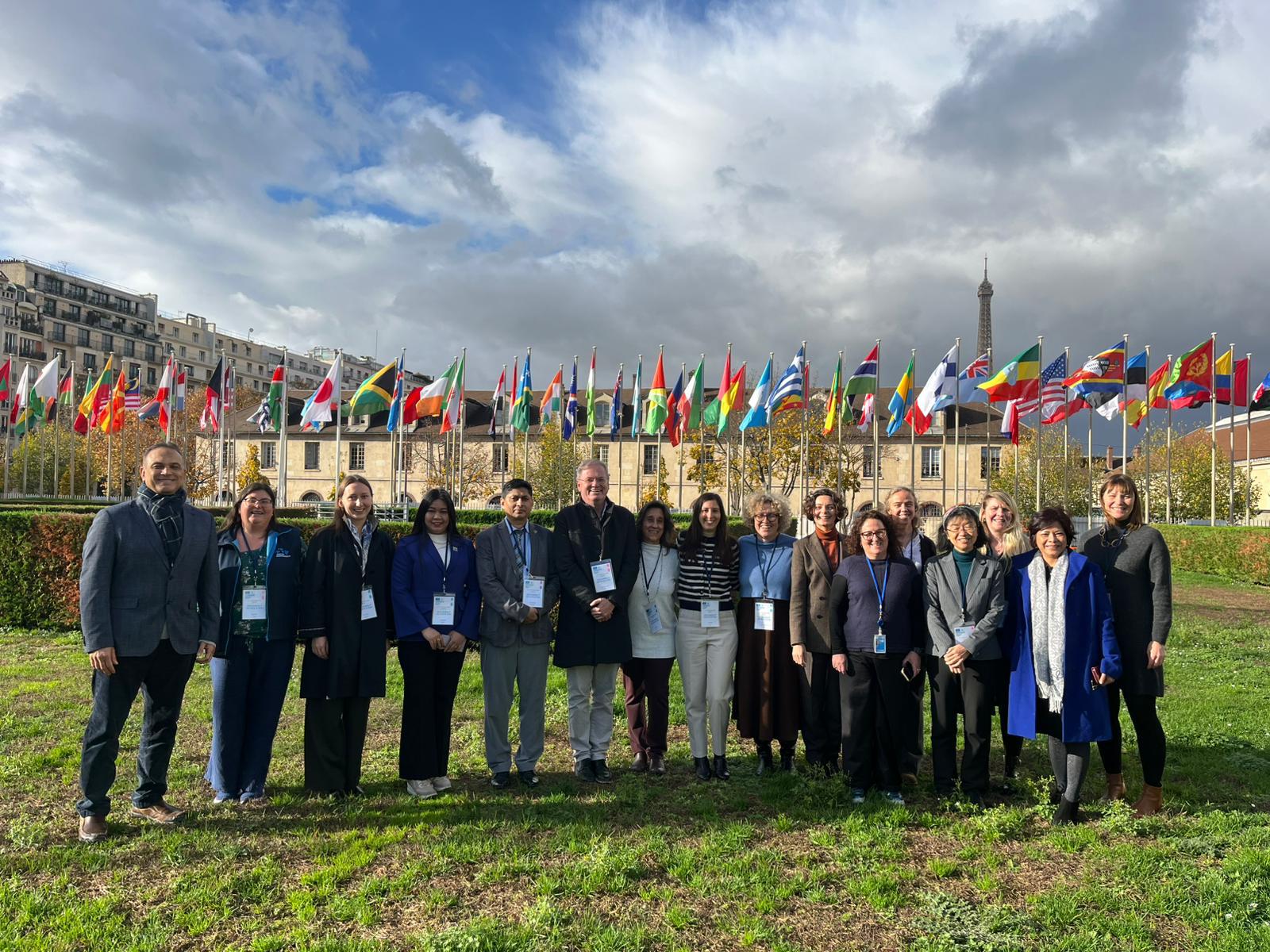
Today, the Intergovernmental Oceanographic Commission (IOC) of UNESCO convenes the first in-person meeting of its renewed Group of Experts on Ocean Literacy (GE-OL) for the 2025-2027 period.
The renewal of the group, which now has 36 members, follows the 33rd Session of the IOC Assembly (June-July 2025), where IOC Member States endorsed its continuation. The Group's Mandate is to guide the implementation of the new IOC Ocean Literacy Plan of Action (2026–2030), recognizing the need to build on the momentum generated by the Group of Experts between 2023 and 2025 and scale up global efforts in ocean education and public engagement, working in collaboration with the Group of Experts on Capacity Development.
A New Plan for a New Phase
The Group's core remit is to guide the finalization and implementation of the new IOC Ocean Literacy Plan of Action (2026–2030). This new plan, developed in draft by the previous group, sets strategic priorities to embed ocean knowledge into the fabric of society. Working in close collaboration with the IOC Group of Experts on Capacity Development.
Key focus areas of the 2026-2030 Plan of Action include:
Integrating Ocean Science into Education: Systematically incorporating ocean science concepts and principles into formal education curricula worldwide.
Informing Policy: Embedding Ocean Literacy into national and international policy, climate adaptation frameworks, and sustainable blue economy strategies.
Fostering Behavioural Change: Developing initiatives that translate ocean awareness into tangible, positive actions for ocean sustainability.
Boosting Public & Digital Engagement: Leveraging emerging technologies like virtual reality (VR) and data visualization, and amplifying global campaigns like GenOcean to reach new and diverse audiences.
The Executive Secretary will then report on the mechanisms identified to improve collaboration at the next meeting of the Executive Board of the IOC.
Global Expertise and Renewed Leadership
The 36-member group reflects a global and multi-stakeholder composition, bringing together leading experts from academia, government, education, private-sector foundations, and non-governmental organizations from 34 countries.
The group will be led by Co-Chairs: Prof. Ronaldo Christofoletti (Professor at the Federal University of San Paulo, Brazil) and Prof. Diana Payne (Associate Professor at the University of Connecticut, USA, and Chair of the Ocean Literacy committee of the National Marine Educators Association).
The work of this new Group of Experts will be fundamental to the success of the UN Decade of Ocean Science for Sustainable Development (2021-2030), ensuring that a more ocean-literate global society becomes one of the Decade's most enduring legacies.
Members of the IOC Group of Experts on Ocean Literacy (2025-2027)
Paulo André de Sousa Coelho (Angola): Head of the Department of Oceanography and Marine Ecosystem Health
Nancy Correa (Argentina): Professor at Escuela de Ciencias del Mar - Universidad de la Defensa Nacional, National Representative for the OTGA, researcher
Ahmad Al Karim (Bangladesh): Director, Maritime Affairs Unit, Ministry of Foreign Affairs
Jan Seys (Belgium): Spokesman/Head of Science Communication, Flanders Marine Institute (VLIZ)
Ronaldo Christofoletti (Co-Chair) (Brazil): Professor at the Federal University of San Paulo (UNIFESP), Instituto do Mar
Diz Glithero (Canada): Executive Director of the Canadian Ocean Literacy Coalition (COLC)
Pilar Muñoz Muga (Chile): Director of “Cultura Oceánica en 360”, Professor at University of Valparaiso
Weng Danfeng (China): Associate Professor, APEC Marine Sustainable Development Center, Third Institute of Oceanography, Ministry of Natural Resources
Olga Lucia Zarate Mantilla (Colombia): Deputy Director of Curriculum Referents and Educational Quality Assessment, Ministry of National Education
Daniela Hill Piedra (Ecuador): Director, Fundación Amiguitos del Océano
Amr Hamouda (Egypt): President of Marine Hazards Mitigation Center, National Institute of Oceanography and Fisheries (NIOF)
Annabel Keerd (Estonia): International cooperation and competitiveness counsellor, Area of Maritime Affairs and Water Resources, Maritime Department
Carolyn Scheurle (France): Coordinatrice de « Culture Océan », pôle de médiation scientifique, Institut de la Mer de Villefranche (Sorbonne Université – CNRS)
Ulrike Heine (Germany): Coordinator, German Ocean Decade Committee (ODK) / Focal Point, Ocean Decade, Germany, Office for of the German Ocean Decade Committee at GEOMAR HelmHoltz-Zentrum fur Ozeanforschung Kiel
Panayota (Yolanda) Koulouri (Greece): Research Director at Hellenic Centre for Marine Research
Syarifah Aini Dalimunthe (Indonesia): Researcher at Research Centre for Population – The National Research and Innovation Agency (BRIN)
Nóirín Burke (Ireland): Education and Outreach Officer at Galway Atlantaquaria & member of the Irish Ocean Literacy Network
Sachiko Oguma (Japan): Senior Administrator, Division of Ocean Vision and Action, Ocean Policy Research Institute, Sasakawa Peace Foundation
Jacqueline Uku (Kenya): Principal Research Scientist at Kenya Marine and Fisheries Research Institute
Manal A. Alkandari (Kuwait): Research Scientist at Kuwait Institute for Scientific Research
Afiq Durrani Bin Mohd Fahmi (Malaysia): Lecturer at University Malaysia Terengganu
Evelia Rivera Arriaga (Mexico): Coordinator and Investigator of the Coastal Management Lab at the Institute for Ecology, Fishing and Oceanography of the Gulf of Mexico
Ngu Kay Khine (Myanmar): Assistant Director, Maritime Safety, Security and Environmental Protection Division, Department of Marine Administration, Ministry of Transport and Communications
Saud Salim Albusaidi (Oman): Marine Ecology Researcher at Marine Science and Fisheries Centre, Ministry of Agriculture, Fisheries and Water Resources
Tymon Zielinski (Poland): Professor, Department head at CORE-Climate and Ocean Research and Education, Institute of Oceanology, Polish Academy of Sciences
Raquel Lorenz Costa (Portugal): Consultant to UNESCO-IOC, UNIFESP, International
Projects
Wonho Yih (Republic of Korea): Principal Investigator at the Korean Academy of Marine Science
Natalia Stepanova (Russian Federation): Head of Centre of Earth Scenes including Coordination Centre "Floating University" and 3 scientific laboratories
Yasser Omar Abualnaja (Saudi Arabia): Associate Director of Climate Change Center, King Abdullah University of Science and Technology (Kaust)
Géraldine Fauville (Sweden): Associate Professor in Education at University of Gothenburg
Emma McKinley (UK): Senior Research Fellow at Cardiff University
Volodymyr Iemelianov (Ukraine): First Vice-Chief Scientific Secretary of NAS of Ukraine, Director of the State Scientific Institution "Center for Problems of Marine Geology, Geoecology, and Sedimentary Ore Formation" of NAS of Ukraine
Majd Mohammed Al Herbawi (United Arab Emirates): Acting Director of the Marine Environment Research Centres Department, Ministry of Climate Change and Environment
Diana Payne (Co-Chair) (USA): Associate Professor at University of Connecticut and Chair of the Ocean Literacy committee of the National Marine Educators Association (NMEA)
Sergio Cobarrubia-Russo (Venezuela): Research Associate at Venezuelan Institute of Scientific Research, Ministry of Science and Technology
Dao Viet Ha (Vietnam): Chairperson of IOC Viet Nam, Director of the Institute of Oceanography, Vietnam Academy of Science and Technology